Growing profile
Reading Clay Soil Before You Plant Anything
Why heavy ground behaves the way it does, and how to work with it instead of against it.
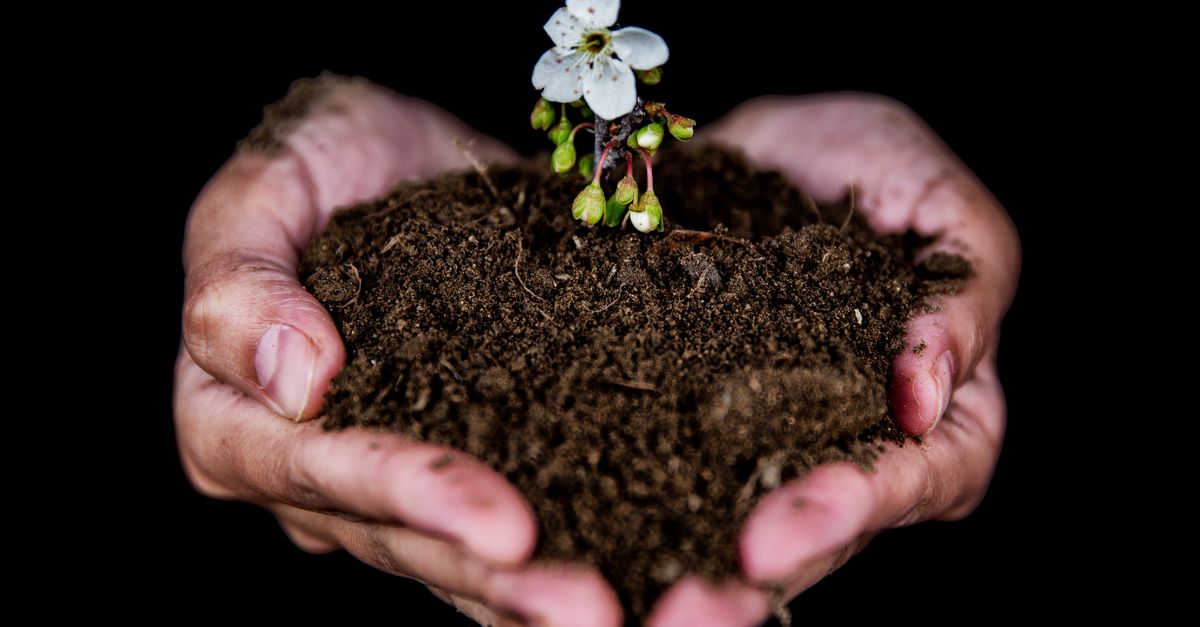
Clay is not a defect you clear out in one weekend. It is a structure with its own logic, and the sooner you learn to read it, the fewer plants you lose to rot or drought stress. The first thing to notice is how the soil feels in your hand. Take a fistful from about a spade deep, squeeze it, and open your fingers. If it holds a shiny ribbon and stays in a solid lump, you are working with heavy clay. If it crumbles into rough crumbs with a little pressure, the clay is already mixed with enough organic material to behave.
The second signal is water. After a steady rain, watch how long a puddle sits in the same spot. Clay drains slowly because its particles are tiny and pack tightly, leaving little room for air. That same tightness is why clay holds nutrients well and why it cracks into wide plates when it dries. Both behaviors come from the same source, and both will shape what you decide to plant.
A simple field test before you commit
Dig a hole roughly the size of a small bucket, fill it with water, and let it drain. Fill it again and time how long the second fill takes to disappear. If it is still there hours later, you have your answer. This is not a laboratory method, but it tells you more about your bed than any label on a bag of soil. Do it in two or three spots, because clay is rarely uniform across a yard.
Three ways to work with heavy ground
- Raised beds. The most direct option when drainage is the main problem. You control the mix, and you stop fighting the subsoil. Aromatic herbs such as lavender and rosemary, which hate wet feet, do far better this way.
- Deep mulch. A thick layer of compost or leaf mold on top of the bed feeds the soil slowly and improves structure over seasons. It is the slowest route, but it asks the least of your back and your budget.
- Slow amendment. Compost and grit worked into the top layer over several seasons will loosen clay without turning it into concrete. This is a plan measured in years, not weeks.
Mistakes that make clay worse
Tilling clay while it is wet is the fastest way to destroy the structure you are trying to build. You end up with hard clods that dry like bricks. Adding sand without organic matter is the other common trap: sand and clay together can set like cement. If you want to loosen the ground, add compost first and let the worms and roots do the rest.
Once you can read your soil, the planting decisions get easier. Some plants tolerate heavy ground well, and others will never be happy in it. The point is not to win a fight with the earth, but to stop guessing.